
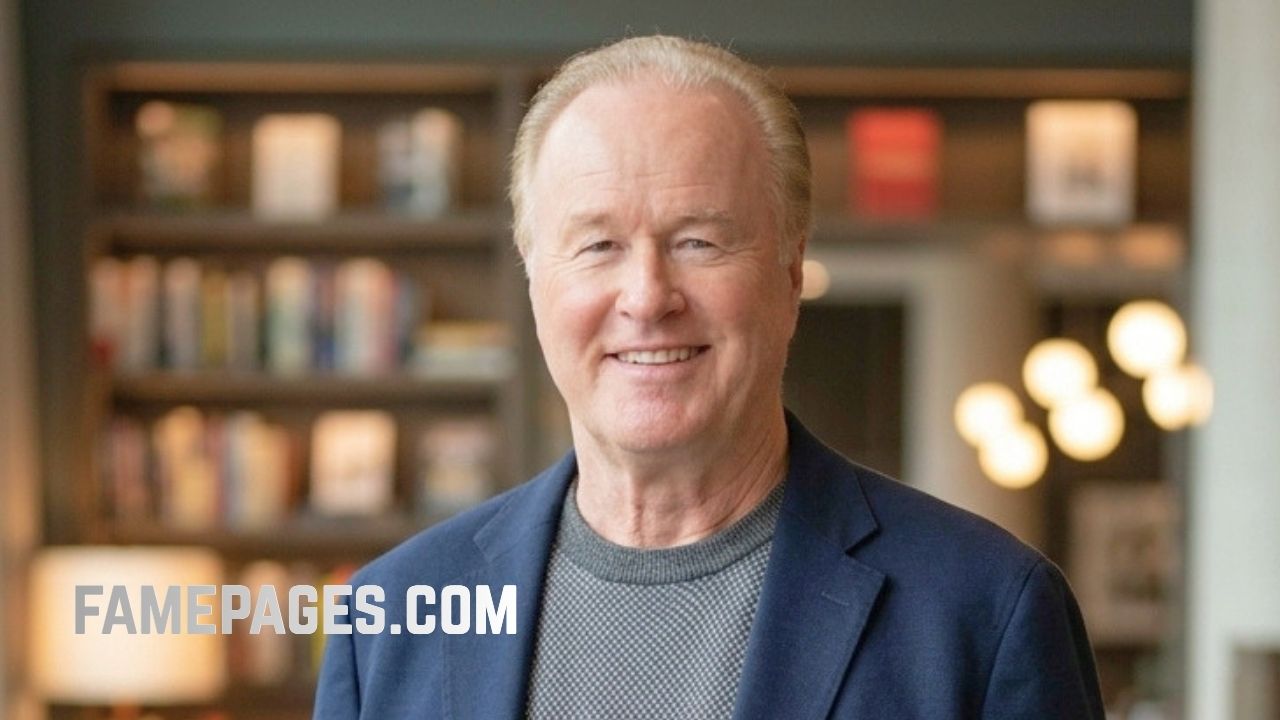
Richard Roberts has spent most of his adult life in a world where faith is not simply a private belief but a public vocation. Born in Tulsa, Oklahoma, on November 12, 1948, he grew up as the son of Oral Roberts, one of the most recognizable American evangelists of the 20th century. Today, at 77, Richard remains associated with the ministry his father built, while his own career has included international evangelism, television broadcasting and university leadership.
That inheritance has given Richard Roberts unusual visibility, but it has also made his career difficult to separate from the Roberts family name. His story includes decades of ministry and broadcasting, a succession at Oral Roberts University that placed him at the center of his father’s institutional legacy, and a 2007 controversy that ultimately ended his presidency. The result is a public biography that cannot be reduced either to religious success or scandal. It is a story about inheritance, ambition, conviction and the complications of carrying a famous name.
Growing Up Inside the Oral Roberts Legacy
Richard’s childhood was shaped by the unusual demands of his father’s vocation. Oral Roberts traveled extensively as a healing evangelist, conducting large meetings and preaching a message centered on faith and divine healing. Richard grew up close to that ministry and eventually became involved in it himself.
According to Richard Roberts Ministries, he began actively working alongside his father at 19. That early experience mattered because it gave him a first-hand education in the mechanics of evangelism long before he became the person leading the organization.
Yet Richard did not initially appear destined to follow a straightforward path into ministry. Accounts of his early years describe an interest in music and a period at the University of Kansas, where he studied music and considered a career as a performer. He also played in the Oklahoma nightclub scene.
His eventual decision to attend Oral Roberts University became a turning point. In a later account published by his ministry, Roberts described an experience while studying at Kansas that he interpreted as a divine call to return to the university founded by his father.
By the late 1960s, music and ministry had begun to merge in his life. He joined his father’s ministry as a singer and gradually moved toward a broader public role.
Finding His Own Voice in Ministry
Following a famous parent can create an unusual professional problem: distinction becomes almost as important as achievement.
Richard Roberts inherited an established religious platform, but he also developed his own identity as a minister and broadcaster. His work became increasingly focused on healing ministry, evangelistic meetings and media outreach.
Richard Roberts Ministries says he has ministered in 39 nations across six continents since 1980, with some of his healing meetings attracting crowds of more than 200,000 people. Those figures come from the ministry itself and describe its view of his international reach rather than independent measurements of the results of those meetings.
His theology and ministry have remained closely associated with the charismatic Christian tradition, particularly prayer for healing, the gifts of the Holy Spirit and the belief that God continues to intervene directly in people’s lives.
This became the foundation for the public identity that would follow him for decades.
When Television Became Part of the Mission
For Richard Roberts, television was never merely an entertainment platform. It became an extension of the ministry.
In 1997, Richard and his wife, Lindsay Roberts, began The Place for Miracles, an interactive program built around preaching, prayer, testimony and viewer participation. Richard Roberts Ministries says the program continues to air and has received more than 157,000 calls from viewers reporting miracle testimonies.
Lindsay has been an important part of that television partnership. Her ministry biography describes her as a minister, writer, editor and speaker, while also identifying her as Richard’s co-host on The Place for Miracles.
The partnership reflects a larger feature of Richard’s career: his professional life has consistently combined ministry with media. Television allowed the Roberts message to travel beyond a church or auditorium, while later digital platforms expanded that reach again.
In 2023, Richard and Lindsay launched the Healing Network, a 24-hour resource focused on healing prayer, faith-based programming and archived material connected with the Roberts ministry.
Taking the Helm at Oral Roberts University
Richard’s most consequential institutional role came in 1993, when he succeeded his father as president of Oral Roberts University.
The transition was more than an ordinary leadership change. Oral Roberts had founded the university in 1965, and his departure from the presidency marked a generational handoff within an institution bearing the family’s name.
Contemporary reporting described Richard, then 44, as the university’s second president. Oral Roberts became chancellor after stepping down as president.
Richard’s presidency lasted roughly 15 years. During that period, he was responsible for an institution whose identity was closely tied to the theology, personality and ambitions of its founder.
That made the position both prestigious and unusually demanding. Richard was not simply succeeding a university president. He was succeeding his father.
The 2007 Crisis That Changed His Public Story
The most difficult chapter of Richard Roberts’ career arrived in 2007.
Three former Oral Roberts University professors filed a lawsuit alleging wrongful termination and raising accusations about university governance, political activity and the use of university resources. The allegations included claims involving personal spending and university property. Richard and Lindsay Roberts denied wrongdoing.
The controversy quickly became a national story within higher education and religious media.
In October 2007, Richard took a temporary leave of absence from the presidency. The situation escalated when the university’s tenured faculty subsequently approved a nonbinding vote of no confidence. On November 23, 2007, Richard Roberts resigned as president.
It is important to distinguish allegations from established findings. Contemporary reports described accusations made in litigation, while Roberts and his wife denied wrongdoing. His resignation ended his presidency, but it should not be presented as proof that every allegation against him was established as fact.
The episode nevertheless became inseparable from his public biography because it ended his most prominent institutional leadership position.
Life After Oral Roberts University
Leaving ORU did not mean leaving ministry.
Richard returned his attention to evangelistic work and broadcasting through the organization associated with his father’s name. Richard Roberts Ministries identifies him as chairman and CEO and says his current emphasis includes international ministry and the Greater Works conferences, where he trains pastors and ministry leaders in developing nations.
His ministry also expanded into online education. In 2010, he founded the Richard Roberts School of Miracles, offering Bible-based courses focused on healing ministry and the work of the Holy Spirit.
This period illustrates an important distinction in Richard Roberts’ career. Although his university presidency ended under intense scrutiny, his role as a religious broadcaster and evangelist continued.
Rather than disappearing from public life, he returned to the field in which he had spent decades building his identity.
Richard Roberts, Family and the Personal Side of Public Ministry
Family has always been central to Richard Roberts’ public story.
His father, Oral Roberts, remains the defining influence on his professional life. His mother, Evelyn, was also part of the family and ministry story. Oral Roberts died in 2009, four years after Evelyn’s death, leaving Richard and the next generation to carry aspects of the organization’s legacy forward.
Richard’s marriage to Lindsay Roberts has also become part of the ministry itself. The couple have worked together on television and other ministry projects for decades. Richard Roberts Ministries describes Lindsay as a minister and writer who co-hosts The Place for Miracles with her husband.
That partnership is significant because the Roberts ministry has never been solely an individual enterprise. It has operated as a family-centered institution in which preaching, broadcasting, publishing and outreach overlap.
What Richard Roberts’ Career Says About Religious Broadcasting
Richard Roberts’ career offers a useful window into the evolution of American televangelism.
His father helped establish the model of using mass media to extend an evangelistic ministry beyond physical meetings. Richard inherited that model and continued adapting it through television, educational programs and digital platforms.
His career also demonstrates the risks that accompany the model. When a ministry is strongly identified with one family, questions about leadership, institutional governance and financial accountability can become deeply personal.
That tension was especially visible during the 2007 ORU crisis. Richard’s experience illustrates how the advantages of a family legacy can also become its greatest burden.
At the same time, his continued ministry demonstrates that a controversial chapter does not necessarily end a public religious career. His work has remained active through broadcasts, teaching programs, prayer outreach and international conferences.
Biography Snapshot
| Fact | Details |
|---|---|
| Full name | Richard Lee Roberts (@richardrobertsofficial) |
| Born | November 12, 1948 |
| Birthplace | Tulsa, Oklahoma |
| Age | 77 as of August 2026 |
| Father | Oral Roberts |
| Profession | Evangelist, broadcaster and religious leader |
| Education | Oral Roberts University, including B.A., M.A. and D.Min. degrees |
| Wife | Lindsay Roberts |
| Former major role | President of Oral Roberts University |
| ORU presidency | 1993 to 2007 |
| Current ministry role | Chairman and CEO of Richard Roberts Ministries |
| Major broadcast | The Place for Miracles |
Frequently Asked Questions
Who is Richard Roberts?
Richard Roberts is an American evangelist, broadcaster and religious leader. He is the son of televangelist Oral Roberts and previously served as president of Oral Roberts University. He continues to lead Richard Roberts Ministries.
How old is Richard Roberts?
Richard Roberts was born November 12, 1948. He is 77 years old as of August 2026.
Who was Richard Roberts’ father?
His father was Oral Roberts, the prominent American evangelist who founded Oral Roberts University and built an international healing ministry.
What did Richard Roberts do at Oral Roberts University?
Richard became the university’s second president in 1993 after succeeding his father. He remained in the position until his resignation in November 2007.
Why did Richard Roberts resign from Oral Roberts University?
He resigned amid a 2007 controversy involving allegations concerning university spending, governance and political activity. Roberts and his wife denied wrongdoing. His resignation followed a temporary leave and a faculty no-confidence vote.
Is Richard Roberts still involved in ministry?
Yes. Richard Roberts Ministries currently identifies him as its chairman and CEO. The organization says he continues international ministry, broadcasting and pastors’ conferences.
Who is Richard Roberts’ wife?
Richard Roberts is married to Lindsay Roberts, who is also a minister, author and broadcaster. The couple have co-hosted The Place for Miracles for many years.
What is Richard Roberts best known for?
He is best known for his work as an evangelist and television broadcaster, his leadership of Oral Roberts University from 1993 to 2007, and his role in continuing the ministry founded by his father.
Final Thoughts
Richard Roberts’ public life cannot be understood through a single label.
He is the son of one of America’s best-known evangelists, but he also became a minister in his own right. He inherited an influential university and led it for 15 years, yet his presidency ended during one of the most difficult controversies in the institution’s history. He experienced the pressure of a famous family name while simultaneously using that name to extend a ministry into television, education and international outreach.
That contradiction is what makes his story worth examining.
Decades after he first entered his father’s ministry, Richard Roberts remains connected to the same central themes that shaped his childhood: faith, healing, broadcasting and evangelism. His career has included significant accomplishments and serious public controversy, and neither side fully explains the man.
What remains most striking is the longevity of the mission. Even after leaving Oral Roberts University, Richard continued building a public ministry rather than retreating from it. Through television, digital education, prayer programs and international conferences, he has continued to work within the religious tradition that defined his family.
His legacy, therefore, is still being written. It belongs partly to the Roberts family, partly to the history of American religious broadcasting, and partly to Richard Roberts himself.




2 thoughts on “Richard Roberts: Faith, Family, Television and a Complicated Legacy”