
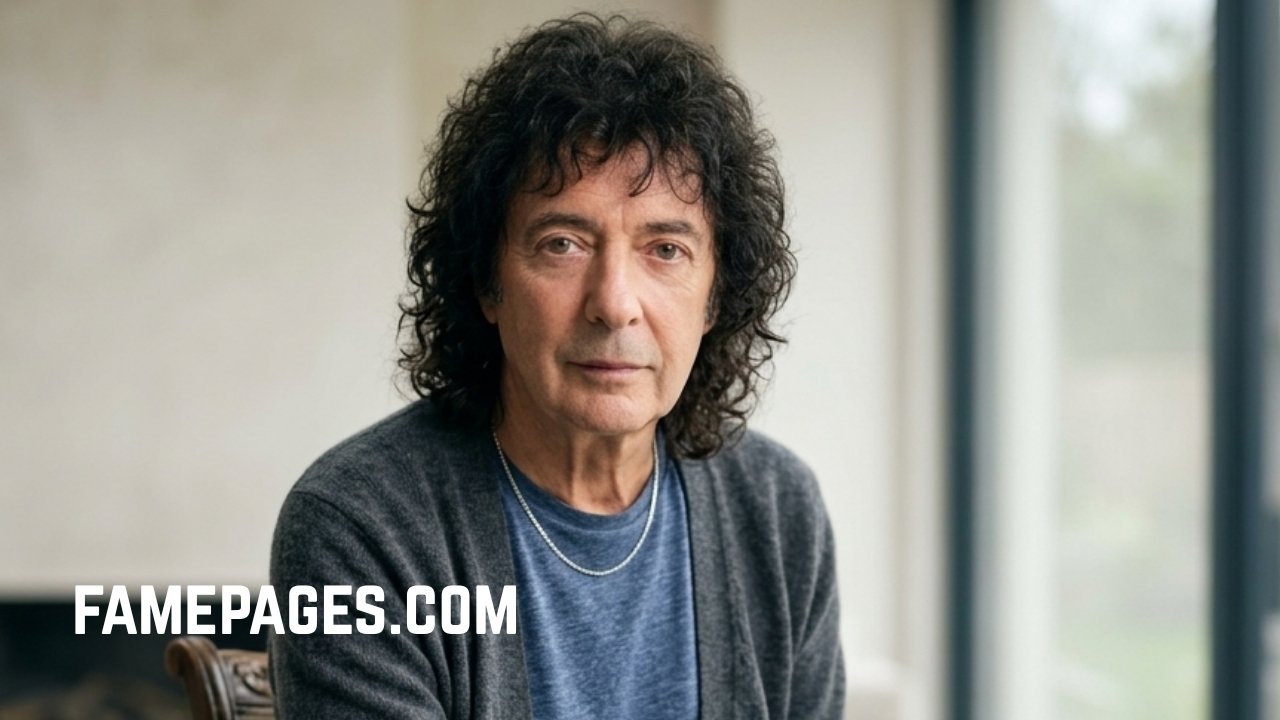
There are guitarists who master an instrument, and then there are musicians who change what audiences believe the instrument can do. Ritchie Blackmore belongs firmly in the second category.
For more than six decades, the English guitarist has moved through radically different musical worlds, from London’s early rock and roll scene to Deep Purple’s explosive hard rock, Rainbow’s grandiose heavy metal, and eventually the medieval-inspired folk music of Blackmore’s Night. Each chapter has sounded different, yet each has carried the same defining quality: Blackmore has rarely seemed interested in following the path laid out for him.
That independence is central to understanding his career. He was not simply the guitarist behind “Smoke on the Water.” He was a musician who repeatedly challenged the expectations surrounding him, even when doing so meant walking away from enormous commercial success.
From London’s Session Scene to Deep Purple
Before international fame, Blackmore built his reputation the old-fashioned way. He worked as a session musician and performed with groups including the Outlaws, while also backing a range of singers and performers. His early professional experience exposed him to different styles and studio techniques, giving him a foundation that would later become important to his highly controlled guitar sound. His official biography describes those early years as an apprenticeship that included work for producer Joe Meek and performances with several British acts.
In 1968, Blackmore became one of the founding members of Deep Purple alongside keyboardist Jon Lord and drummer Ian Paice. The original band explored a mixture of rock, psychedelia, blues and progressive influences before evolving into something considerably heavier.
The arrival of Ian Gillan and Roger Glover in 1969 helped create the lineup that would become synonymous with Deep Purple. Blackmore, Lord, Gillan, Glover and Paice developed a volatile but extraordinarily powerful musical chemistry.
The results were transformative.
Deep Purple and the Sound of Hard Rock
Deep Purple’s early 1970s recordings helped establish a blueprint for hard rock. Albums such as In Rock, Fireball and *Machine Head demonstrated how heavy guitar riffs, dramatic vocals, classical keyboard textures and virtuosic improvisation could coexist without sacrificing melody.
Blackmore was at the center of that sound.
His guitar playing combined blues phrasing with classical ideas, aggressive riff construction and extended improvisation. Rather than treating the guitar merely as a rhythm or lead instrument, he used it as a dramatic voice within the band.
Machine Head, released in 1972, became one of the defining albums of the era. “Smoke on the Water” emerged from the chaotic circumstances surrounding the album’s recording in Montreux, Switzerland, after a casino fire forced Deep Purple to find an alternative recording location. The song’s opening riff would become one of the most recognizable guitar figures in popular music.
Yet reducing Blackmore’s Deep Purple legacy to one riff misses the bigger picture. “Highway Star,” “Lazy,” “Space Truckin'” and other songs showcased a guitarist capable of moving between muscular rhythm playing and technically demanding solos.
Deep Purple’s official history credits the classic Mark II lineup with creating several of the defining rock albums of the early 1970s. The band was ultimately inducted into the Rock and Roll Hall of Fame in 2016.
What Made Ritchie Blackmore’s Guitar Playing Different?
Blackmore‘s signature was not simply speed.
His playing could be bluesy, aggressive, melodic, theatrical and unexpectedly delicate. He had an instinct for memorable musical phrases, but he also possessed a fascination with classical composition that distinguished him from many of his contemporaries.
That combination became particularly important as hard rock developed into heavy metal.
Blackmore’s riffs gave songs immediate identity, while his solos supplied a sense of danger and unpredictability. His approach helped establish the idea that a rock guitarist could borrow seriously from classical music without losing the physical power of amplified rock.
This mixture of discipline and rebellion became one of the most influential aspects of his style.
Rainbow and a New Musical Direction
By the middle of the 1970s, Blackmore wanted another creative challenge. He left Deep Purple in 1975 and formed Rainbow, initially with singer Ronnie James Dio.
Rainbow gave Blackmore a new environment in which to explore his interest in fantasy, classical textures and heavier songwriting. The band’s early work, particularly Ritchie Blackmore’s Rainbow and Rising, became highly influential among hard rock and heavy metal musicians.
“Man on the Silver Mountain,” “Stargazer” and “A Light in the Black” demonstrated a different side of Blackmore. The music could be grand and dramatic, but it was also structured around strong melodies and memorable guitar work.
Rainbow’s lineup changed repeatedly over the years, and so did its musical direction. The band gradually moved toward a more accessible form of hard rock, producing songs with greater commercial appeal.
Blackmore remained the central creative force.
Rainbow also became a launching pad for musicians who would go on to important careers of their own. Roger Glover, for example, later returned to Deep Purple after playing with Rainbow from 1979 to 1984.
Returning to Deep Purple, Then Walking Away Again
Deep Purple reunited with its classic lineup in the mid-1980s, bringing Blackmore back into the group that had made him famous.
The reunion produced commercially successful music and renewed worldwide interest in the band. But the relationship between Blackmore and his Deep Purple colleagues remained complicated.
In 1993, he left Deep Purple for the final time.
That departure was more than the end of another lineup change. It marked the closing of one of the most important chapters in British hard rock. Deep Purple continued without him, eventually entering another creative era with guitarist Steve Morse and, later, Simon McBride.
For Blackmore, however, another musical transformation was already beginning.
The Unexpected Second Act of Blackmore’s Night
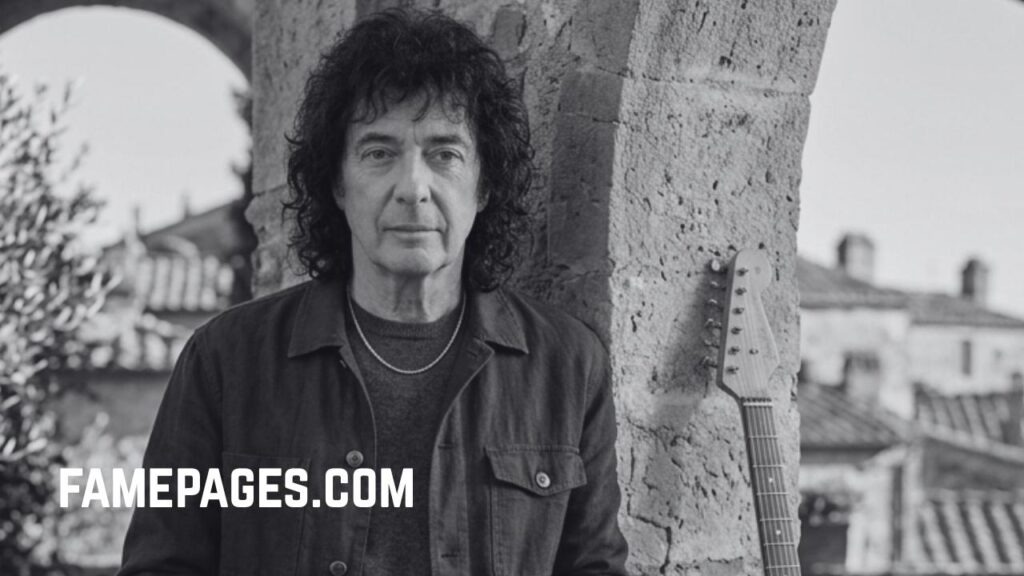
In 1997, Blackmore formed Blackmore’s Night with Candice Night, moving away from the amplified hard rock that had defined much of his career.
To longtime fans, the transition was startling.
Instead of towering guitar riffs and arena-sized rock performances, Blackmore began exploring Renaissance and folk traditions, acoustic instruments and songs centered more heavily on melody and vocals. The project’s debut album, Shadow of the Moon, represented a dramatic departure from his Deep Purple and Rainbow work.
It was not simply a nostalgic experiment. Blackmore appeared to be pursuing a musical world that had fascinated him for years.
The official Blackmore’s Night biography describes the project as a Renaissance folk rock venture that began in 1997 and developed toward more acoustic and vocalist-centered music.
Candice Night became an important creative partner in that chapter. Their collaboration began with Shadow of the Moon, and the album’s 25th anniversary edition was released in 2023 after the original master tapes were rediscovered, restored and remixed.
The result is one of the more unusual second acts in rock history: a guitarist celebrated for helping define heavy music choosing instead to spend much of his later career exploring centuries-old musical traditions.
Ritchie Blackmore’s Life Away From the Spotlight
Blackmore’s public persona has often been associated with intensity and independence, but his later musical life has also revealed a quieter side.
His partnership with Candice Night became both personal and creative, with their work together forming the foundation of Blackmore’s Night. Rather than treating his earlier fame as something he needed to reproduce indefinitely, Blackmore pursued a style of music that reflected his changing interests.
That choice says something important about the man behind the reputation.
For many artists, success creates pressure to repeat the formula that made them famous. Blackmore repeatedly did the opposite. His career shows a willingness to abandon expectations when they no longer matched his creative instincts.
A Legacy Larger Than “Smoke on the Water”
Ritchie Blackmore’s influence cannot be measured by album sales or one famous guitar riff alone.
He helped establish Deep Purple as one of the foundational bands of hard rock. His playing with Rainbow influenced generations of metal and hard rock musicians. His approach to combining blues, classical ideas and heavy amplification helped expand the vocabulary of the electric guitar.
At the same time, Blackmore’s later work demonstrated that musical identity does not have to remain frozen in the era that created it.
His career has therefore become unusual even among rock legends. He helped build the sound of 1970s hard rock, moved into increasingly melodic forms of heavy music, returned to Deep Purple, left again, and then embraced Renaissance-inspired folk music.
The contrast is part of the legacy.
Biography Snapshot
| Detail | Verified Information |
|---|---|
| Full name | Richard Hugh Blackmore (@therealritchieblackmore) |
| Born | April 14, 1945 |
| Birthplace | Weston-super-Mare, Somerset, England |
| Profession | Guitarist, songwriter, musician |
| Best known for | Deep Purple and Rainbow |
| Major later project | Blackmore’s Night |
| Deep Purple tenure | 1968 to 1975; 1984 to 1993 |
| Musical styles | Rock, hard rock, heavy metal, folk rock, Renaissance music |
| Spouse | Candice Night |
| Deep Purple honor | Rock and Roll Hall of Fame inductee, 2016 |
Blackmore’s official site confirmed his 81st birthday in April 2026, while Deep Purple’s official history documents his two major periods with the band.
Frequently Asked Questions
How old is Ritchie Blackmore?
Ritchie Blackmore was born on April 14, 1945, making him 81 years old in 2026.
What bands was Ritchie Blackmore in?
He is best known for Deep Purple and Rainbow. Before those groups, he worked as a session musician and performed with the Outlaws and other British acts.
Why did Ritchie Blackmore leave Deep Purple?
Blackmore left Deep Purple in 1975 to pursue Rainbow and departed the reunited band again in 1993. His disagreements with the group’s musical direction and internal dynamics were important parts of the story.
What is Ritchie Blackmore’s most famous song?
He is strongly associated with Deep Purple’s “Smoke on the Water,” whose opening guitar riff became one of rock’s most recognizable musical motifs.
Is Ritchie Blackmore still making music?
Yes. Blackmore has continued his musical work through Blackmore’s Night, the Renaissance and folk rock project he formed with Candice Night in 1997.
What is Blackmore’s Night?
Blackmore’s Night is a Renaissance-inspired folk rock project founded by Ritchie Blackmore and Candice Night in 1997. Its music emphasizes acoustic instruments, traditional influences and vocal-centered songwriting.
Who is Ritchie Blackmore married to?
Ritchie Blackmore is married to singer and songwriter Candice Night, who is also his musical collaborator in Blackmore’s Night.
Related Reading
Final Thoughts
Ritchie Blackmore’s career is difficult to summarize because it refuses to follow a straight line.
He helped create some of the most powerful sounds in rock, became one of the defining guitarists of his generation, built another influential band with Rainbow, returned to Deep Purple, and then stepped away from hard rock to pursue Renaissance-inspired music.
That final decision may be the most revealing part of his story.
Blackmore never seemed satisfied with simply repeating what had already worked. His legacy is therefore not only the riffs, solos and albums that changed rock guitar. It is the example of an artist willing to change direction even after reaching the summit.
For a musician who spent decades associated with volume, speed and electricity, perhaps the most remarkable thing about Ritchie Blackmore is that his lasting influence ultimately comes from something quieter: the freedom to follow his own musical curiosity.




2 thoughts on “Ritchie Blackmore: The Guitarist Who Redefined Rock”